


A-F ratings provide Houston an important moment to take stock of our school systems and the academic bar they are setting for students.
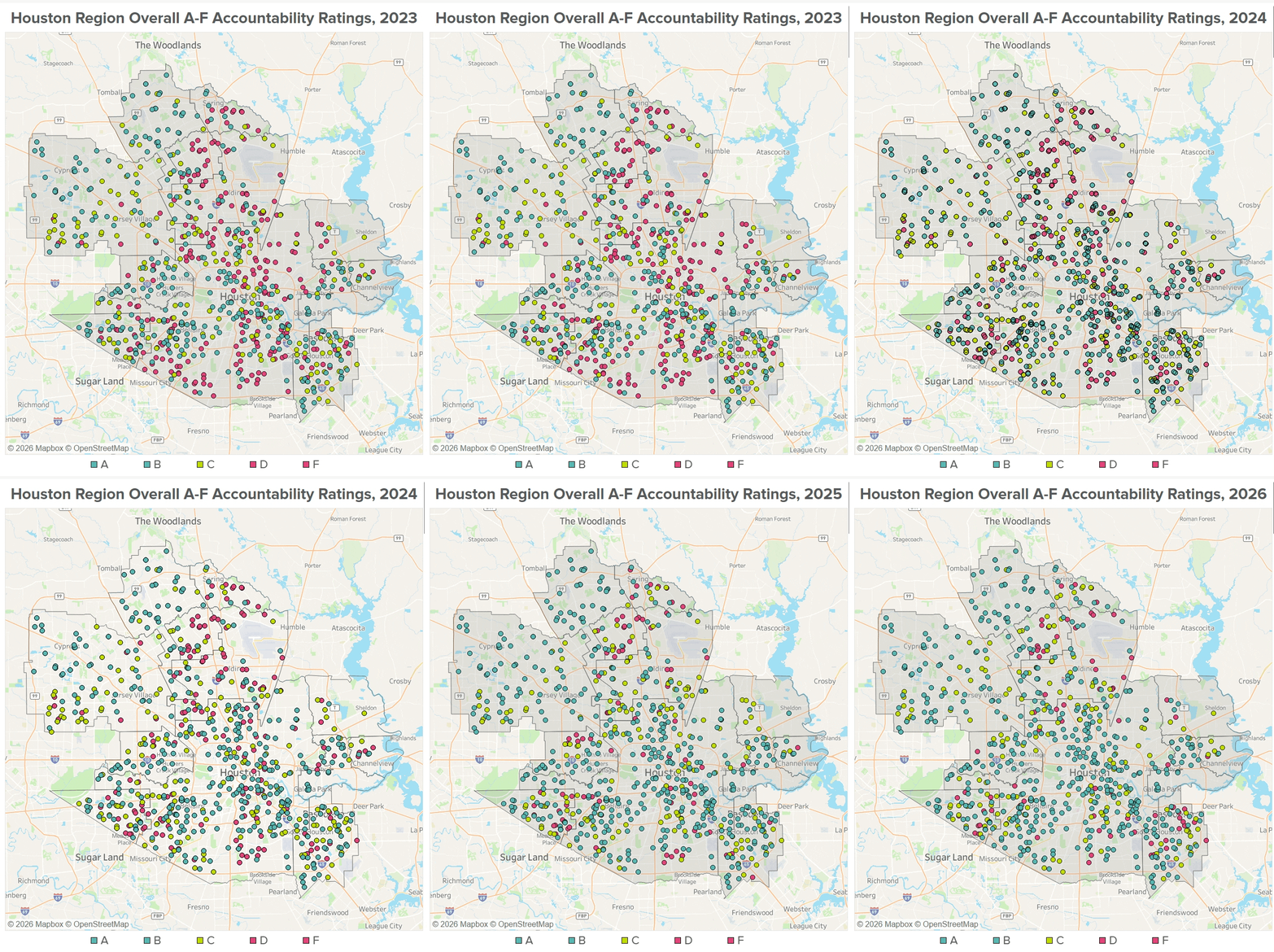
Across the Houston region, 71% of Houston students now attend an A- or B-rated school, according to ratings released today by the Texas Education Agency. That’s over 176,000 more students than in 2023. This progress is driven by stronger academic growth and higher College, Career, and Military Readiness (CCMR) results across the region. During that same period, the percentage of students attending D- or F-rated schools fell from 32% to 8%. These gains reflect the sustained effort of teachers, campus leaders, and district administrators to improve student achievement, accelerate academic growth, and close student gaps through research-backed practices.
Behind every rating is a student, classroom, and community working toward something bigger. Accountability ratings provide a consistent signal of where students are succeeding, where progress is taking hold, and where challenges remain. But no single letter tells the whole story. Understanding what a rating means for students requires looking at achievement, growth, academic opportunities and the district decisions behind it. Today’s ratings invite Houstonians to ask a bigger question: “What bar are school districts setting for their students, and is it high enough to prepare them for the future?”
“Improved ratings in our region are worth celebrating and reflect the growth we saw in student achievement based on STAAR. The accountability system continues to evolve, and Good Reason Houston is focused on ensuring more students are on a path to earning at least a living wage,” said Courtney Isaak Pichon, CEO of Good Reason Houston. This means helping policy makers, district leaders, and community members understand what’s behind the ratings and prioritize programs that set students up for a high-wage job in the future.”
176,000 More Houston Students Attend an A- or B-Rated School Than in 2023
The 2026 ratings are the first ratings to be released on-schedule since Texas refreshed the A-F accountability system in 2023. Across the region, 78% of Houston students attend a campus that improved by at least one letter grade, or maintained an A- or B-rating in comparison to 2025. By comparison, only 14% attend a campus that declined or stayed at D/F. Overall, 71% of Houston-region students attend an A- or B-rated school, 21% a C-rated school, and 8% a D- or F-rated school.
Growth Is Promising. Rigor Is What Makes It Last.
The Houston region has 174 more A- or B-rated schools in 2026 than it did three years ago, an important sign of progress. Districts such as Galena Park, Klein, and YES Prep now have more than 90% of campuses rated A or B. However, no single rating tells the whole story, and understanding what those ratings mean for students, requires looking at both current achievement and academic growth.
Domain 1 of the rating system measures Student Achievement, while Domain 2, the Academic Growth component, shows how much students have improved over time. When growth over time is stronger than current achievement, it can signal that a campus or district is accelerating student learning, even though students may not have reached grade-level proficiency. Current CCMR indicators represent several pathways to readiness, and those pathways do not all provide the same evidence of connection to postsecondary success or economic mobility. That nuance does not diminish the progress. It helps us understand where districts need to make strategic decisions to deepen and sustain it. The next opportunity school districts face is sustaining student growth until more students consistently meet rigorous academic milestones.
This year, the region recorded an eight-point gain in Algebra I achievement and its highest-ever percentage of students reading on grade level in grades 3-8. Sustaining this momentum will help close the distance between where students are today, and where they need to be in the future to earn postsecondary credentials, pursue living-wage careers, and thrive in a Houston of tomorrow.

Why Monitoring Unacceptable Ratings Matters
Unacceptable ratings signal that students and campuses need stronger support and they trigger a state-mandated improvement timeline. After a first unacceptable count, a campus must develop a targeted improvement plan. A second consecutive rating requires a turnaround plan, while campuses with three or more must implement one. After five consecutive unacceptable ratings, state law requires the education commissioner to order the campus closed or appoint a Board of Managers to govern the district. Houston ISD’s intervention was triggered after Wheatley High School received its seventh consecutive unacceptable rating.
The 2028 A-F refresh will change how performance is measured, but it will not reset existing accountability counts. That makes monitoring them important for several reasons:
- Student Success: Consecutive low ratings can signal students are missing key milestones, like reading on grade level in third grade or being on a path to advanced math before high school, which help prepare students for a postsecondary education and living-wage careers. Future changes to the accountability system, which weight more rigorous college and career readiness, could raise the bar schools are held to and better reflect what students actually need to succeed after graduation.
- State Action: Texas law outlines the process by which the state must either intervene in a district or close a campus after five years of unacceptable performance ratings. More broadly, the law outlines a series of steps and requirements for turning around campus performance. Families and educators can use this information to better understand what support schools will receive as they work to improve student outcomes.
- Houston ISD’s return to local control: Since the state intervention began, HISD has reduced its number of D/F campuses from 116 in 2023 to 13 in 2026. One of the district’s exit criteria for returning to local control is that no campus may carry multiple D or F ratings. Four HISD campuses currently carry one year of consecutive unacceptable ratings, meaning they remain subject to intervention requirements, even as the district transitions back to local governance. Returning to local control also does not reset a count.
Since state intervention began, HISD has decreased its number of D- or F-rated campuses from 116 in 2023 to 13 in 2026. Four campuses in HISD carry one year of consecutive unacceptable ratings, meaning they remain subject to intervention requirements, even as the district transitions back to local governance. Returning to local control also does not reset a count.
Commitments & Next Steps
Our Research, Data, and Impact team is diving further into the data to understand A-F rating data and what they mean for our community. To learn more, register for our webinar, Beyond the Letter Grade, on Thursday, Aug. 20, at 11:30 a.m. CDT and stay tuned for our next blog, where we dive deeper into A-F rating trends across various student groups and school districts.
For Parents and Family Members: Take time to understand your school’s rating and what contributed to it. Because ratings reflect the previous school year, your campus may already have key learnings and action plans underway based on the results.
If you’d like to dive deeper, ask your campus leadership team what the campus priorities and plans are for this year, and how families can partner in the work ahead. To explore your school’s results, understand how ratings are calculated, or find answers to frequently asked questions, visit txschools.org.
For Campus and District Leaders: Looking to leverage statewide resources to improve student outcomes through initiatives like the Accelerating Campus Excellence (ACE) model, Resource Campus Designation, or the School Action Fund (SAF)? Reach out to a member of our District Impact Team here. Our team is here to help you make the most of these resources to drive student outcomes at campuses with multiple years of low accountability ratings.
Accountability ratings alone cannot guarantee whether schools are supporting students to reach academic milestones connected to future education, career, and a living-wage job. However, we remain committed to advocating for a stronger system that focuses on ensuring schools provide the knowledge, skills, and opportunities students need to pursue these experiences. As we continue to work alongside community members, teachers, campus and district leaders, and policymakers, what remains vital is sustaining progress and keeping students at the center of decisions.ultiple years of low accountability ratings.


