
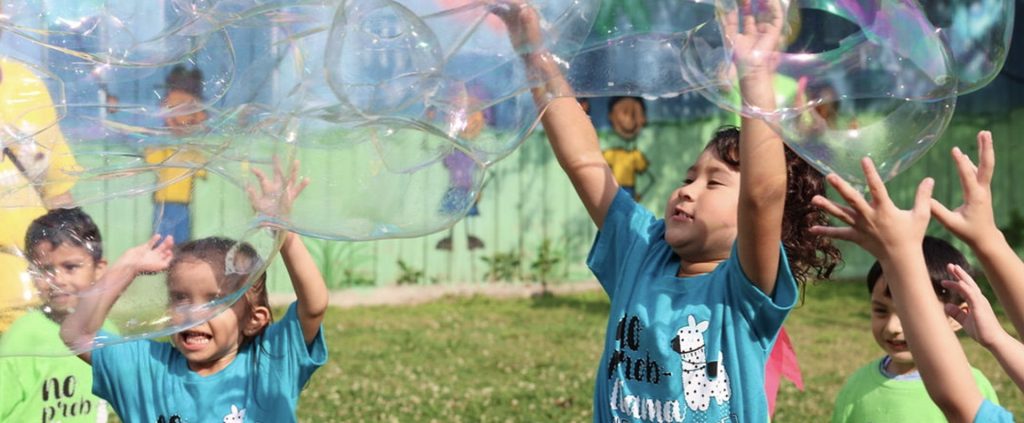
For families choosing Pre-K, safety is about trust, belonging, and the confidence that their child will be known, valued, and cared for.
When we asked Houston families what matters most in choosing a Pre-K program, their answer was clear: safety.
Sixty-eight percent of families in our survey ranked safety as a top factor in their Pre-K decisions. For Hispanic families — particularly those in Aldine, Channelview, Galena Park, and Pasadena ISDs — safety concerns outweighed cost considerations by a 2-to-1 margin.
When we dug deeper in focus groups across the region, we learned something critical: when parents say “safety,” they mean something much bigger than secure entrances and locked doors.
Safety, for these families, is about whether their child will be loved. Whether they’ll belong. Whether the adults caring for them will see them as individuals deserving of respect and developmentally appropriate expectations. And whether parents themselves will be treated as valued partners in their child’s education.
One parent pulled her child from public Pre-K the day of our focus group because of how school staff had made her feel. She told us: “I pulled them out today to homeschool. I feel that the school and district interactions are not from a place where they think good about us. Since we are low income there are assumptions around our family that aren’t accurate and it goes down to how they act with the children. We don’t have much money, but we have a good family and the things they assume about how we parent and my child’s life aren’t true. When I try to talk to them they can’t hear me through whatever they think about us. I just don’t feel comfortable with my son being that young because if they make me feel that way when I try to talk to them, how do they make my three-year-old feel?”
This is what safety means.
Safety as a Confidence Question
In the current political climate, with heightened immigration enforcement and increased scrutiny of public institutions, some Houston families are understandably hesitant about engaging with public services, including schools, before they’re legally required to do so. For Hispanic families in districts serving larger economically disadvantaged populations, “safety” encompasses deeply personal questions: Will my family be treated with dignity? Will assumptions be made about us based on our income, language, or neighborhood? Can I trust that raising a concern won’t result in negative consequences for my child?
These concerns are rooted in lived experience. When two-thirds of focus group participants said they didn’t feel seen as partners who could inform schools about their own children, it became clear: safety concerns are fundamentally about whether families trust that their child will be respected and valued. That’s a question that can only be answered through consistent, welcoming, respectful interactions.
The Many Dimensions of Safety
When parents described what safety means to them, four distinct dimensions emerged.
Physical safety. Parents want secure facilities, supervised drop-off, and clean, well-maintained spaces. “From the time they get out of the car until they get back in.” These are foundational, and they’re where the conversation about safety begins, not ends.
Emotional safety. This is the heart of it. Parents want to know their child is loved and emotionally secure. “My child should feel loved, not scared.” “Good energy. Teachers want to be there.” During campus tours, parents look for the tone of greetings, whether staff demonstrate visible care and patience, and whether the classroom environment feels warm or cold. Emotional safety is assessed through observation and feeling, not policy documents.
Cultural safety. Parents want environments where their family’s background, language, and experiences are reflected and respected, including staff who look like them, translated materials, and celebrations of diverse cultures. For Black and Latino families, cultural safety includes a particularly painful dimension: whether their children, especially their sons, will face bias in how behavior is interpreted and managed.
A Black father stood up in one of our focus groups and asked the room: “Who in here has a son?” Two-thirds raised their hands. He continued: “Now who feels like the expectations for your son were appropriate?” That question opened a conversation where the majority of parents described their 3- and 4-year-old sons being expected to sit still all day and being quickly labeled for showing developmentally normal behavior. Parents noted: “Not having other brown or black male presence in institutions, that’s a concern.”
Relational safety. Can parents speak up without fear? Several parents expressed this explicitly: “You don’t want the teacher to retaliate on the child after you report them.” When parents feel they can’t raise concerns safely, they either remain silent about problems or withdraw their children entirely.
The “Boxed Out” Dynamic
Perhaps the most powerful moment in our focus groups came from this exchange. A Pre-K aide who is also a parent stated that in her experience, many enrollment problems stem from a lack of family engagement. A father responded immediately:
“I feel like I’m boxed out from the beginning. The front desk isn’t friendly, I feel unwanted. You have so many rules that keep us out of the building. So yes, when you call me and want me to then partner with you when you need me to come discipline — yep, I am one of those parents who say that. Because you’ve boxed me out. So if you make me feel like I can’t be a part of my kid’s school experience and you want me to drop them off and go away, then don’t call me when you need me to come discipline him.”
This exchange captures the core safety dilemma. When parents feel unwelcome from the first interaction, when policies and practices communicate “stay out until we need you,” they disengage, because the system has told them they’re not valued as partners. Safety means being treated as a partner from day one.
What Confidence-Building Looks Like in Practice
Schools that successfully build family confidence demonstrate it consistently through action.
They show physical and emotional safety through visible staff presence at arrival and dismissal with warm, personalized greetings; classroom tours where families can observe how teachers interact with children; regular updates showing children thriving; and staff training focused on trauma-informed care and developmentally appropriate expectations.
They show cultural safety through diverse staff who reflect the community, multilingual communication, celebrations of culture visible throughout the building, and professional development focused on implicit bias and culturally responsive teaching.
They show relational safety through open-door policies that invite parents to visit without appointments, proactive communication about learning, transparent follow-up processes when concerns arise, and staff who listen first and approach families as experts on their own children.
Confident families have seen the evidence. They’ve experienced it firsthand.
When Schools Get It Right
Farias Early Childhood Center, Laurenzo Early Childhood Center, Kennedy Elementary and Stephanie Cravens Early Childhood Academy are schools that come up again and again when Houston families describe programs that get this right. One parent drives 40 minutes to Kennedy: “Parents are welcomed in. I can come in and see my kids, I read to their class, I help set up stations. Whenever I pop up I’m welcomed in like I work there.” Multiple focus group participants described Farias as a school that “meets families with warmth and love and care from day one.”
What these schools share: they make families feel like partners from the first interaction. They communicate regularly about learning and growth. They have veteran staff who are known and trusted in the community. And families are willing to drive across district lines to access that.
The Stakes: Why This Matters Beyond Pre-K
Pre-K represents families’ first sustained interaction with public schools. The experiences families have during Pre-K enrollment and programming shape their trust and engagement with schools for the duration of their child’s K-12 education.
When families trust that their 3 or 4-year-old is emotionally and culturally safe, they engage, and that engagement compounds over time. They become partners and advocates for years to come. When that trust is absent, families either opt out entirely or enroll and disengage, and that pattern persists through elementary, middle, and high school.
Safety is a feeling. And families will drive 40 minutes — or choose not to enroll at all — based on whether they have it. The good news is that this is something schools can control.
Read the full pre-k report

